"When we think of plagues, we think of AIDS, Ebola, anthrax spores, and, of course, the Black Death. But in 1918 the Great Flu Epidemic killed an estimated 40 million people virtually overnight. If such a plague returned today, taking a comparable percentage of the U.S. population with it, 1.5 million Americans would die."(source)
"In the fall of 1918 the Great War in Europe was winding down and peace was on the horizon. The Americans had joined in the fight, bringing the Allies closer to victory against the Germans. Deep within the trenches these men lived through some of the most brutal conditions of life, which it seemed could not be any worse. Then, in pockets across the globe, something erupted that seemed as benign as the common cold. The influenza of that season, however, was far more than a cold. In the two years that this scourge ravaged the earth, a fifth of the world's population was infected."(source)
"As the world's peoples were celabrating the end of war, the end of dying, and a fresh beginning, the second and most virulent of three waves of a new killer, 'Spanish Influenza', rages with freocity greater than all the killing power of the previous four years of war, killing tens of millions."(source)
"In the ten months between September 1918 and June 1919, 675,000 Americans died of influenza and pneumonia. When compared to the number of Americans killed in combat in World War I, World War II, Korea, and Vietnam combined- 423,000- it becomes apparent that the influenza epidemic of 1918-1919 was far more deadly than the war which it accompanied. (Crosby, 206-207) The United States and the rest of the world had been exposed to such epidemics in the past, but never at such a severe cost in human life."(source)
"If you had lived in the early twentieth century, your life expectancy would have been much shorter than it is today. Today, life expectancy for men is 75 years; for women, it is 80 years. In 1918, life expectancy for men was only 53 years. Women’s life expectancy at 54 was only marginally better."(source)
"The plague did not discriminate. It was rampant in urban and rural areas, from the densely populated East coast to the remotest parts of Alaska. Young adults, usually unaffected by these types of infectious diseases, were among the hardest hit groups along with the elderly and young children. The flu afflicted over 25 percent of the U.S. population. In one year, the average life expectancy in the United States dropped by 12 years"(source)
"The impact of this pandemic was not limited to 1918–1919. All influenza A pandemics since that time, and indeed almost all cases of influenza A worldwide (excepting human infections from avian viruses such as H5N1 and H7N7), have been caused by descendants of the 1918 virus, including "drifted" H1N1 viruses and reassorted H2N2 and H3N2 viruses. The latter are composed of key genes from the 1918 virus, updated by subsequently incorporated avian influenza genes that code for novel surface proteins, making the 1918 virus indeed the "mother" of all pandemics."(source)
"Overall the United States was the least affected with some 675,000 deaths. The biological origins of the flu may have been from birds, transmitted to pigs, and as it mutated to humans. It was the most devastating epidemic in recorded history and depressed life expectancy in the United States by ten years. With the close of the war in Europe and the transition to the roaring twenties those who survived tried to move on. The impact was hard to measure at the time but the destabilization in Spain with the death of the King was the precursor to events that would contribute to the unthinkable Second Great War."(source)
Book 1
Book 2
Tuesday, November 17, 2009

Tuesday, November 10, 2009
WWI
"(1914 – 18) International conflict between the Central Powers — Germany, Austria-Hungary, and Turkey — and the Allied Powers — mainly France, Britain, Russia, Italy, Japan, and (from 1917) the U.S. After a Serbian nationalist assassinated Archduke Francis Ferdinand of Austria in June 1914, a chain of threats and mobilizations resulted in a general war between the antagonists by mid-August. Prepared to fight a war on two fronts, based on the Schlieffen Plan, Germany first swept through neutral Belgium and invaded France. After the First Battle of the Marne (1914), the Allied defensive lines were stabilized in France, and a war of attrition began."(source)
"The explosive that was World War One had been long in the stockpiling; the spark was the assassination of Archduke Franz Ferdinand, heir to the Austria-Hungarian throne, in Sarajevo on 28 June 1914. Ferdinand's death at the hands of the Black Hand, a Serbian nationalist secret society, set in train a mindlessly mechanical series of events that culminated in the world's first global war."(source)
"The causes of World War One are complicated and unlike the causes of World War Two, where the guilty party was plain to all, there is no such clarity. Germany has been blamed because she invaded Belgium in August 1914 when Britain had promised to protect Belgium. However, the street celebrations that accompanied the British and French declaration of war gives historians the impression that the move was popular and politicians tend to go with the popular mood."(source)
"World War 1 became infamous for trench warfare, where troops were confined to trenches because of tight defenses. This was especially true of the Western Front. More than 9 million died on the battlefield, and nearly that many more on the home fronts because of food shortages, genocide, and ground combat. Among other notable events, the first large-scale bombing from the air was undertaken and some of the century's first large-scale civilian massacres took place, as one of the aspects of modern efficient, non-chivalrous warfare."(source)
"Foreign policy was only occassionally an issue of broad concern in the United States in 1914. The country was excited over 'the slendid little war' with Spain, but that war lasted only a few months.The number of people actually involved with national security affairs-such as army and navy personal, diplomats, or colonial administrators-was miniscule. Contemporaies and historians debated the morality of conquering The Philipines and Theodore Roosevelt's methods in acquirering control over Panama. They disagreed over the meaning of the Open Door Policy for Asia and the purposes of dollar diplomacy. But these issues, as important as they were, did not immediatly bring fundamental changes to the character of the nation or the lives of the people. In 1914 an era passed. Foriegn policy suddely determined the nation's future. The ocassion was the outbreak of war in Europe."(source)
"By 1918 there were strikes and demonstrations in Berlin and other cities protesting about the effects of the war on the population. The British naval blockade of German ports meant that thousands of people were starving. Socialists were waiting for the chance to seize Germany as they had in Russia. In October 1918 Ludendorff resigned and the German navy mutinied. The end was near. Kaiser Wilhelm II abdicated on November 9th 1918. On 11th November the leaders of both sides held a meeting in Ferdinand Foch's railway carriage headquarters at Compiegne. The Armistice was signed at 6am and came into force five hours later"(source)
"World War One was a milestone in U.S. History.While winners and losers in Europe came out of the war crippled, the United States, in many ways, gained in stature. The nation, at last, had become a world power. With all the pride and hardships that role brought with it."(source)
Book 1
Book 2
Monday, October 26, 2009
Panama Canal
"The history of the Panama Canal goes back to 16th century. After realizing the riches of Peru, Ecuador, and Asia, and counting the time it took the gold to reach the ports of Spain, it was suggested c.1524 to Charles V, that by cutting out a piece of land somewhere in Panama, the trips would be made shorter and the risk of taking the treasures through the isthmus would justify such an enterprise. A survey of the isthmus was ordered and subsequently a working plan for a canal was drawn up in 1529. The wars in Europe and the thirsts for the control of kingdoms in the Mediterranean Sea simply put the project on permanent hold."(source)
"The actual building of the Panama Canal which, unknown to many, was carried out in two phases, brought in a whole new series of factors in calculating the cost of building an engineering marvel of the kind that was inaugurated in 1914 in the tiny republic of Panama. The first building phase known as the French Period lasted ten years from 1881-1889. It, as well as the American Period, 1904-1914, will be remembered for its audacity but, more than for its boldness and engineering innovation, it will recall the enormous price paid in human life."(source)
"Ever since the Spaniards landed in the Isthmus of Panama for the first time in 1501, Panama has been a natural transit route for merchandise and people attempting to cross from one ocean to the other.As early as the 1520’s the Spanish Crown explored the possibility of constructing a Canal through the Isthmus, but the idea was later abandoned. In the 19th Century, the United States also saw the opportunity of joining the two oceans, but they had a railroad in mind instead of a Canal.In 1832, Congress sent Col. Charles Biddle to Panama to negotiate a concession for the construction of a railroad. He also inspected the country for the best route. Biddle died shortly afterward, but interest in the project continued. In 1848 a charter was granted to the Pacific Mail Steamship Company to deliver mail between the U.S. and Panama. The incorporators were William H. Aspinwall, his uncle, Gardiner Green Howland, Henry Chauncey, and Edwin Bartlett. Three wooden paddle-wheel steamships were built; the California, the Oregon and the Panama. They would deliver mail between New York, Panama and San Francisco, but the discovery of gold in California in January 1848 took Aspinwall’s attention away from mail delivery".(source)
"The people of Panama had joined their neighbor, Colombia, in a nation known as greater Colombia. In the 1840's, they had fought to win their Independence, but lost. So it was Colombia, not Panama, that controlled the area when a group of Frenchmen decided they wanted to build a canal."(source)
The end of the Panama Canal construction book source.
Book 1
Book 2
"From 1819, Panama was part of the federation and country of Colombia but when Colombia rejected United States plans to build a canal across the Isthmus of Panama, the U.S. supported a revolution that led to the independence of Panama in 1903."(source)
"Groundbreaking on the Panama Canal began in 1881 and was not completed until 1914. The French government was in charge of building the canal until it abandoned it in 1889. The United States took over control of construction at that point and oversaw its completion."(source)"The actual building of the Panama Canal which, unknown to many, was carried out in two phases, brought in a whole new series of factors in calculating the cost of building an engineering marvel of the kind that was inaugurated in 1914 in the tiny republic of Panama. The first building phase known as the French Period lasted ten years from 1881-1889. It, as well as the American Period, 1904-1914, will be remembered for its audacity but, more than for its boldness and engineering innovation, it will recall the enormous price paid in human life."(source)
"Ever since the Spaniards landed in the Isthmus of Panama for the first time in 1501, Panama has been a natural transit route for merchandise and people attempting to cross from one ocean to the other.As early as the 1520’s the Spanish Crown explored the possibility of constructing a Canal through the Isthmus, but the idea was later abandoned. In the 19th Century, the United States also saw the opportunity of joining the two oceans, but they had a railroad in mind instead of a Canal.In 1832, Congress sent Col. Charles Biddle to Panama to negotiate a concession for the construction of a railroad. He also inspected the country for the best route. Biddle died shortly afterward, but interest in the project continued. In 1848 a charter was granted to the Pacific Mail Steamship Company to deliver mail between the U.S. and Panama. The incorporators were William H. Aspinwall, his uncle, Gardiner Green Howland, Henry Chauncey, and Edwin Bartlett. Three wooden paddle-wheel steamships were built; the California, the Oregon and the Panama. They would deliver mail between New York, Panama and San Francisco, but the discovery of gold in California in January 1848 took Aspinwall’s attention away from mail delivery".(source)
"The people of Panama had joined their neighbor, Colombia, in a nation known as greater Colombia. In the 1840's, they had fought to win their Independence, but lost. So it was Colombia, not Panama, that controlled the area when a group of Frenchmen decided they wanted to build a canal."(source)
The end of the Panama Canal construction book source.
Book 1
Book 2
Monday, October 19, 2009
Theodore Roosevelt
"I don't pity any man who does hard work worth doing. I admire him. I pity the creature who does not work, at whichever end of the social scale he may regard himself as being."-Theodore Roosevelt
"Theodore Roosevelt is one of the few Presidents whose life, or at least the public image of his life, is even more important historically than his accomplishments as our chief executive officer."(source)
"Theodore Roosevelt (October 27, 1858–January 6, 1919) was born in New York into one of the old Dutch families which had settled in America in the seventeenth century. At eighteen he entered Harvard College and spent four years there, dividing his time between books and sport and excelling at both. After leaving Harvard he studied in Germany for almost a year and then immediately entered politics. He was elected to the Assembly of New York State, holding office for three years and distinguishing himself as an ardent reformer."(source)
"Roosevelt's engaging personality enhanced his popularity. Aided by scores of photographers, cartoonists, and portrait artists, his features became symbols of national recognition; mail addressed only with drawings of teeth and spectacles arrived at the White House without delay. TR continued to be newsworthy in retirement, especially during the historic Bull Moose campaign of 1912, while pursuing an elusive third presidential term. He remains relevant today. This exhibition is a retrospective look at the man and his portraiture, whose progressive ideas about social justice, representative democracy, and America's role as a world leader have significantly shaped our national character."(source)
"All of his childhood life, young Theodore was frequently stricken with severe asthma. Interestingly, and unnoticed by the family and apparently Theodore himself, the illness often struck on Sundays. Theodore would spend the night fighting to breathe or would often be taken into the country for fresh air. It is now believed that the illness was psychosomatic, something not understood at the time. As time went on, he suffered less and less from this ailment, suffering very few attacks by the time he was in college."(source)
"Despite his death at age sixty, Theodore Roosevelt's legacy lives on. His moral integrity and strength of character are models which should be emulated by everyone around the world. Theodore Roosevelt was not only one of the finest presidents the United States has ever elected; Theodore Roosevelt was also a faithful husband, a model parent, an enthusiastic citizen who sought to accomplish something great for his country and the world at large. TR was a prolific writer and tireless campaigner for the protection of basic human rights, a masterful politician who shaped the world around him, always basing his actions on the American concepts of freedom, equal justice under the law, and the pursuit of happiness."(source)
Wednesday, October 14, 2009
Spanish American War
"In the summer of 1898, the United States fought Spain in one of the shortest and most pathetically one-sided wars in modern history. The war represented a powerful resurgence of the same doctrine of Manifest Destiny that had led the United States to expand westward by defeating Mexico in 1846-48. This impulse toward imperialism took place as major European nations were establishing colonies throughout Africa. As a result of the Spanish-American War, the United States became a world power that controlled an empire stretching from the Caribbean Sea to the Far East."(source)
"The war originated in the Cuban struggle for independence from Spain, which began in February 1895. Spain’s brutally repressive measures to halt the rebellion were graphically portrayed for the U.S. public by several sensational newspapers, and American sympathy for the rebels rose. The growing popular demand for U.S. intervention became an insistent chorus after the unexplained sinking in Havana harbour of the battleship USS Maine (Feb. 15, 1898; see Maine, destruction of the), which had been sent to protect U.S. citizens and property after anti-Spanish rioting in Havana. Spain announced an armistice on April 9 and speeded up its new program to grant Cuba limited powers of self-government, but the U.S. Congress soon afterward issued resolutions that declared Cuba’s right to independence, demanded the withdrawal of Spain’s armed forces from the island, and authorized the President’s use of force to secure that withdrawal while renouncing any U.S. design for annexing Cuba."(source)
"The Spanish-American War (1898) was fought over the liberation of Cuba from Spain. During the 1870s the Cuban people rebelled against Spanish rule. The Spanish subdued the rebellion, but peace on the Caribbean island could not be maintained. Worsening economic conditions resulted in a revolution in 1895. American leaders feared that the insurrection (rebellion) would neither end in victory for the Cubans nor would the Spanish be strong enough to put down the rebel forces. Meanwhile, the American public had been reading a steady stream of newspaper stories from the island and were increasingly supporting U.S. intervention."(source)
"The Spanish American War lasted from late April (the date varies a few days as to when the 'official' beginning occurred - April 22, 23, or 25) to December 10, 1898 when it ended with the signing of the Treaty of Paris between the U.S. and Spain. It only lasted eight months. The Spanish American War was a global war, being fought physically in the Philippines, Guam, Puerto Rico and Cuba. In addition, it was fought politically in the home countries as well as in diverse places such as Egypt and Hawaii. Particularly important also is that the war was fought between the U.S. and Spain. This may sound obvious, but is a point of confusion. Lastly, the Filipinos served as an active defacto, but unofficial U.S. ally."(source)
"In April of 1897 Roosevelt was appointed Assistant Secretary of the Navy as a reward for his staunch and tireless campaigning for the newly elected President, William McKinley. Theodore had been greatly affected the logic of Captain (later Rear Admiral) Alfred Thayer Mahan's "The Influence of Sea Power Upon History" since he had reviewed the book for the Atlantic Monthly in 1890. Now he could begin to put Mahan's beliefs into practice. Mahan had indicated that several key points concerning the Navy were revealed by studying the history of various countries and their Navies. First, that the United States ought to develop a strong Navy capable of extending its power across the ocean where it could defend U.S. interests at a safe distance from the home coastline. Neither Roosevelt or Mahan believed in the Isolationist view that the U.S. coastal defense was the sole use of the Navy. Also, if the Navy was going to be a world force, bases would have to be established at various locations, such as Cuba, Puerto Rico, and Hawaii."(source)
The once mighty and far-flung Spanish Empire evaporated with the wisps of smoke that still spiraled into the heavens on the morning of July 4th. The American ships were crowded with defeated Spanish sailors, many of them wounded. Indeed the victorious sailors were conspicuous by their reverent treatment of their captured foes. Later, upon his return home, Admiral Cervera wrote in his official report: 'The Americans clothed and fed our men--giving them anything they needed. The victors suppressed their shouts of joy in order not to increase the suffering of the defeated--and all vied to make our captivity as easy as possible.' One American newspaperman heralded the valiant last gasp of Cervera's squadron when he wrote: 'If Spain was served as well by her statesmen and public officials as she was by her sailors, she might still be a great country.'(source)
"Peace was arranged by the Treaty of Paris signed Dec. 10, 1898 (ratified by the U.S. Senate, Feb. 6, 1899). The Spanish Empire was practically dissolved. Cuba was freed, but under U.S. tutelage by terms of the Platt Amendment (see under Platt, Orville), with Spain assuming the Cuban debt. Puerto Rico and Guam were ceded to the United States as indemnity, and the Philippines were surrendered to the United States for a payment of $20 million. The United States emerged from the war with new international power. In both Latin America and East Asia it had established an imperial foothold. The war tied the United States more closely to the course of events in those areas."(source)
Book 1
Book 2
Saturday, September 5, 2009
Radical Reconstruction
"The Reconstruction era was the period after the American Civil War. During this time, the South was in political, social and economic turmoil, and eleven Confederate states had seceded from the Union during the wartime unrest. In response, the Union implemented a controversial reconstruction plan to regain order in the Confederate states."(source)
"It was a peculiarity of 19th century politicsd that more than a year elapsed of a Congress and its initial meeting. The 39th Congress, elected in 1864 inthe midst of war, assembled in December 1865to confront the crucial issues of Reconstruction:Who would control the South? Who wouild rule the nation? What was to be the status of the emancipated slaves? In both houses, Republicans outnumbered Democrats by better then three to one. The interaction between the Republican party's distinctive factions would effectively determine the contours of Congressional policy."(source)
"Both Lincoln and Johnson had foreseen that the Congress would have the right to deny Southern legislators seats in the U.S. Senate or House of Representatives, under the clause of the Constitution that says 'Each house shall be the judge of the...qualifications of its own members.' This came to pass when, under the leadership of Thaddeus Stevens, those congressmen (called 'Radical Republicans') who sought to punish the South refused to seat its elected senators and representatives. Then, within the next few months, the Congress proceeded to work out a plan for the reconstruction of the South quite different from the one Lincoln had started and Johnson had continued."(source)
"The Radical Republicans believed blacks were entitled to the same political rights and opportunities as whites. They also believed that the Confederate leaders should be punished for their roles in the Civil War. Leaders like Pennsylvania Representative Thaddeus Stevens and Massachusetts Senator Charles Sumner vigorously opposed Andrew Johnson's lenient policies."(source)
"Once President Johnson lost control over Reconstruction, it became a battle within the Republican Party. Moderates and Radicals both ultimately wanted to protect the rights of blacks, but political objectives would partly stand in the way. Nevertheless, Radical Reconstruction ushered in the election of black politicians, the Military Reconstruction Acts, and the 14th and 15th Amendments."(source1, source2)
Lincoln started a good idea and it was blown out of proportion. Lincoln knew that he couldn't not make everyone happy so his plan tried its best to makes many people happy as possible. Johnson and the Radical Republicans turned the original idea into complete chaos. This affects the future of America. The Radical Reconstruction was in the end a complete disaster.(source)
Book 1
Saturday, August 29, 2009
Ulysses S. Grant
Ulysses S. Grant was born on April 27, 1822 in Point Pleasant, Clermaont County, Ohio. At the age of seventeen he went to West Point. At West Point, Grant was one of 50 cadets that later served in the Civil War. Grant was a average student; he graduated 21st in his class out of 39. His favorite subject was mathematics, he hoped to eventually becaome an instructor at West Point but was sent to join the infantry comany in St. Louis. "When Grant arrived at West Point and discovered that the Academy had him registered under the wrong name, he tried to get the error corrected. He was told that it didn't matter what he or his parents thought his name was, the official government application said his name was 'Ulysses S.' and that application could not be changed. If Hiram U. Grant wanted to attend West Point, he would have to change his name." (source1, source2)
"As tensions mounted between the United States and Mexico, Grant and his regiment participated in the battles of Palo Alto, and Resaca de la Palma as part of the army of Zachary Taylor, an officer he greatly admired. In these fights, Grant learned to not fear combat as well as the importance of sound logistics and adequate supply. Grant and his regiment accompanied the army of General Winfield Scott all the way to Mexico City, where Grant distinguished himself in the battles of Molino del Rey and Chapultepec".(source)
"Grant spent the next six years in St. Louis, Missouri with his wife, Julia Dent Grant. After several short-lived pursuits, including a brief episode as a farmer, he moved to Galena, Illinois to be a clerk in his brother’s store. When the Civil War began in 1861, he jumped at the chance to volunteer for military service in the Union army. His first command was as the colonel of a regiment from Illinois, but he was promoted to brigadier general by September."(source)
"Grant the general had many qualities but he had a thing that's very necessary for a great general. He had what they call 'four o'clock in the morning courage.' You could wake him up at four o'clock in the morning and tell him they had just turned his right flank and he would be as cool as a cucumber. Grant, after that first night in the Wilderness, went to his tent, broke down, and cried very hard. Some of the staff members said they'd never seen a man so unstrung. Well, he didn't cry until the battle was over, and he wasn't crying when it began again the next day. It just shows you the tension that he lived with without letting it affect him... Grant, he's wonderful."(source)
"Grant, dying a painful death from throat cancer, wrote his Personal Memoirs (1885-86) to help support his family. This work is highly regarded by historians for its candor, evenness, and humor."(source)
"Grant showed many admirable and lovable traits. There was a charming side to his trustful simplicity, which was at times almost like that of a sailor set ashore. He abounded in kindliness and generosity, and if there was anything especially difficult for him to endure, it was the sight of human suffering, as was shown on the night at Shiloh, where he lay out of doors in the icy rain rather than stay in a comfortable room where the surgeons were at work. His good sense was strong, as well as his sense of justice, and these qualities stood him in good service as president, especially in his triumphant fight against the greenback monster. Altogether, in spite of some shortcomings Grant was a massive, noble and lovable personality, well fitted to be remembered as one of the heroes of a great nation."(source)
Book 1
Book 2
Sunday, August 23, 2009
Lincoln's worldview
"Born in a backwoods cabin 3 miles (5 km) south of Hodgenville, Kentucky, Lincoln was two years old when he was taken to a farm in the neighbouring valley of Knob Creek. His earliest memories were of this home and, in particular, of a flash flood that once washed away the corn and pumpkin seeds he had helped his father plant. His father, Thomas Lincoln, was the descendant of a weaver's apprentice who had migrated from England to Massachusetts in 1637. Though much less prosperous than some of his Lincoln forebears, Thomas was a sturdy pioneer. On June 12, 1806, he married Nancy Hanks. The Hanks genealogy is difficult to trace, but Nancy appears to have been of illegitimate birth. She has been described as “stoop-shouldered, thin-breasted, sad,” and fervently religious. Thomas and Nancy Lincoln had three children: Sarah, Abraham, and Thomas, who died in infancy."(source)
"Lincoln had less than a year of schooling. Books were scarce and so was paper. He worked his arithmetic problems on a board and cleaned the board with a knife so he could use it again.The family owned a Bible and he spent many hours reading it. He would copy parts of it in order to memorize it. Sometimes he would walk for miles to borrow a book. One of his favorite books was 'The Life of George Washington'.By the time he was 17, he knew he wanted to be a lawyer. He would walk 17 miles to the county courthouse in order to watch the lawyers work. He sat in the back of the courtroom and watched them as they shook their fists and became red in the face. Then he would go home and think about what he had seen."(source)
"The one term congressman who became president in 1861 was about to face the most difficult and agonizing choices any president has encountered. He was keenly aware of his responsibility. When he left his home in Springfield for Washington, D.C., Lincoln compared his own task to that of the country's first president calling it 'greater than that which rested upon Washington'"(source)
"As president, Lincoln had no one way of making the difficult decision that arose.He listened a great deal, often did not offer his opinion to those advising him, and took his time deciding. This often gave the appearance of indecision and weakness. In reality, Lincoln withstood a series of crisis that would shattered a weaker man. Others considered Lincoln stubborned tyrannical. But he met decisions with humility, courage, independence, and gentleness-if not always with success." (source)
On the night of April 14,1865 Mary and Abraham Lincoln attended a showing at Ford's Theater. During the show Lincoln had been shot in the back of the head. While he was unconscience, men had carried him across the street to the Peterson House and into the room of a war department clerk. Though doctors did all that they could, it was not enough. Lincoln died on April 15, 1865at 7:22 a.m.(source)
Book 1
Book 2
"Lincoln had less than a year of schooling. Books were scarce and so was paper. He worked his arithmetic problems on a board and cleaned the board with a knife so he could use it again.The family owned a Bible and he spent many hours reading it. He would copy parts of it in order to memorize it. Sometimes he would walk for miles to borrow a book. One of his favorite books was 'The Life of George Washington'.By the time he was 17, he knew he wanted to be a lawyer. He would walk 17 miles to the county courthouse in order to watch the lawyers work. He sat in the back of the courtroom and watched them as they shook their fists and became red in the face. Then he would go home and think about what he had seen."(source)
"The one term congressman who became president in 1861 was about to face the most difficult and agonizing choices any president has encountered. He was keenly aware of his responsibility. When he left his home in Springfield for Washington, D.C., Lincoln compared his own task to that of the country's first president calling it 'greater than that which rested upon Washington'"(source)
"As president, Lincoln had no one way of making the difficult decision that arose.He listened a great deal, often did not offer his opinion to those advising him, and took his time deciding. This often gave the appearance of indecision and weakness. In reality, Lincoln withstood a series of crisis that would shattered a weaker man. Others considered Lincoln stubborned tyrannical. But he met decisions with humility, courage, independence, and gentleness-if not always with success." (source)
"In February 1860, Lincoln made his first major political appearance in the Northeast when he addressed a rally at the Cooper Union in New York. He was now sufficiently well known to be a presidential candidate. At the Republican national convention in Chicago in May, William H. Seward was the leading candidate. Seward, however, had qualities that made him undesirable in the critical states the Republicans had lost in 1856: Pennsylvania, Indiana, Illinois, and New Jersey. As a result Lincoln won the nomination by being the second choice of the majority. By the time of Lincoln's inauguration in March 1861, seven states had seceded from the Union. His conciliatory inaugural address had no effect on the South, and, against the advice of a majority of his cabinet, Lincoln decided to send provisions to Fort Sumter in Charleston harbor. The fort was a symbol of federal authority--conspicuous in the state that had led secession, South Carolina--and it would soon have had to be evacuated for lack of supplies. On Apr. 12, 1861, South Carolina fired on the fort, and the Civil War began."(source1, source2)
On the night of April 14,1865 Mary and Abraham Lincoln attended a showing at Ford's Theater. During the show Lincoln had been shot in the back of the head. While he was unconscience, men had carried him across the street to the Peterson House and into the room of a war department clerk. Though doctors did all that they could, it was not enough. Lincoln died on April 15, 1865at 7:22 a.m.(source)
Book 1
Book 2
Saturday, May 30, 2009
LAST BLOG!!!
"Neither physicians nor medicines were effective. Whether because these illnesses were previously unknown or because physicians had not previously studied them, there seemed to be no cure. There was such a fear that no one seemed to know what to do. When it took hold in a house it often happened that no one remained who had not died. And it was not just that men and women died, but even sentient animals died. Dogs, cats, chickens, oxen, donkeys sheep showed the same symptoms and died of the same disease. And almost none, or very few, who showed these symptoms, were cured. The symptoms were the following: a bubo in the groin, where the thigh meets the trunk; or a small swelling under the armpit; sudden fever; spitting blood and saliva (and no one who spit blood survived it). It was such a frightful thing that when it got into a house, as was said, no one remained. Frightened people abandoned the house and fled to another." -Marchione di Coppo Stefani
This year we learned about the plague and I wouldn't say it was the most important thing I learned about, but it was by far the most interesting thing I learned about. So in these next few paragraphs I am going to give a brief description of the plague and how it started, then I will explain why this topic was so intriguing to me.
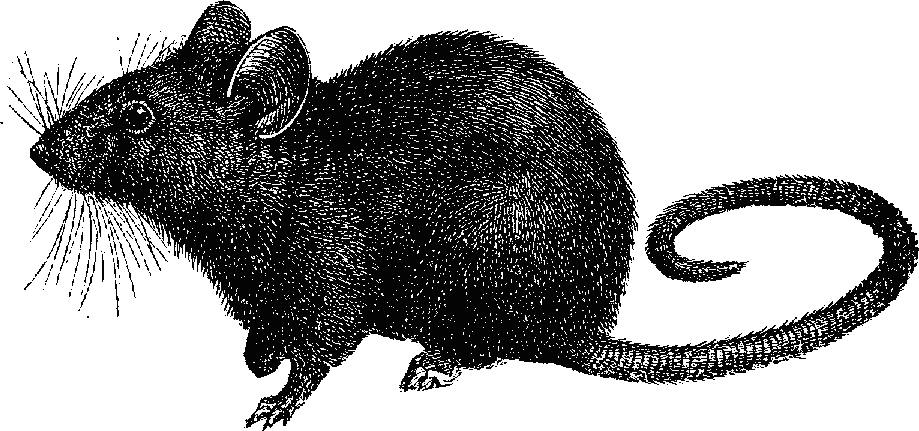
The plague, also known as The Black Death, started in 1347 A.D. in England, and was said to have been one of the worst natural disasters in history. It swept through Europe devastated cities causing death and hysteria. One third of Europe's population had withered away. The root of all this chaos were oriental rat fleas which were bared on the backs of black rats.
"According to a traditional story, the plague came to Europe from the town of Caffa, a Crimean port on the Black Sea where Italian merchants from Genoa maintained a thriving trade center. The Crimea was inhabited by Tartars, a people of the steppe, a dry, treeless region of central Asia. When the plague struck the area in 1346, tens of thousands of Tartars died. Perhaps superstition caused the Muslim Tartars to blame their misfortune on the Christian Genoese. Or perhaps a Christian and Muslim had become involved in a street brawl in Caffa, and the Tartars wanted revenge. In any case, the Tartars sent an army to attack Caffa, where the Genoese had fortified themselves. As the Tartars laid siege to Caffa, plague struck their army and many died. The Tartars decided to share their suffering with the Genoese. They used huge catapults to lob the infected corpses of plague victims over the walls of Caffa. As the Tartars had intended, the rotting corpses littered the streets, and the plague quickly spread throughout the besieged city. The Genoese decided they must flee; they boarded their galleys and set sail for Italy, carrying rats, fleas, and the Black Death with them."
In conclusion, I think the reason for why I liked studying this topic so much was because it's just so gory and gross and things like that are always fun to learn about. So I would like to end by saying thank you Mr. L for giving us such a great year and for being such a great class advisor to us.Haha! See ya Next year!
This year we learned about the plague and I wouldn't say it was the most important thing I learned about, but it was by far the most interesting thing I learned about. So in these next few paragraphs I am going to give a brief description of the plague and how it started, then I will explain why this topic was so intriguing to me.
The plague, also known as The Black Death, started in 1347 A.D. in England, and was said to have been one of the worst natural disasters in history. It swept through Europe devastated cities causing death and hysteria. One third of Europe's population had withered away. The root of all this chaos were oriental rat fleas which were bared on the backs of black rats.
"According to a traditional story, the plague came to Europe from the town of Caffa, a Crimean port on the Black Sea where Italian merchants from Genoa maintained a thriving trade center. The Crimea was inhabited by Tartars, a people of the steppe, a dry, treeless region of central Asia. When the plague struck the area in 1346, tens of thousands of Tartars died. Perhaps superstition caused the Muslim Tartars to blame their misfortune on the Christian Genoese. Or perhaps a Christian and Muslim had become involved in a street brawl in Caffa, and the Tartars wanted revenge. In any case, the Tartars sent an army to attack Caffa, where the Genoese had fortified themselves. As the Tartars laid siege to Caffa, plague struck their army and many died. The Tartars decided to share their suffering with the Genoese. They used huge catapults to lob the infected corpses of plague victims over the walls of Caffa. As the Tartars had intended, the rotting corpses littered the streets, and the plague quickly spread throughout the besieged city. The Genoese decided they must flee; they boarded their galleys and set sail for Italy, carrying rats, fleas, and the Black Death with them."
In conclusion, I think the reason for why I liked studying this topic so much was because it's just so gory and gross and things like that are always fun to learn about. So I would like to end by saying thank you Mr. L for giving us such a great year and for being such a great class advisor to us.Haha! See ya Next year!
Sunday, December 14, 2008
Louis XIV
"Louis XIV's parents, King Louis XIII and his wife Anne of Austria, hated each other. Their marriage remained unconsummated for at least 4 years; it was 23 years before their first child, Louis, was born in 1638. Apparently encouraged by this success, the royal couple produced another son, Phillipe, in 1640."(source)
"Louis XIV, France's Sun King, had the longest reign in European history (1643-1715). During this time he brought absolute monarchy to its height, established a glittering court at Versailles, and fought most of the other European countries in four wars. The early part of his reign (1643-61), while Louis was young, was dominated by the chief minister Cardinal Mazarin. In the middle period (1661-85) Louis reigned personally and informatively, but the last years of his personal rule (1685-1715) were beset by problems."(source)
"When Louis XIV came to the throne as a five-year-old boy (actually four years, eight months) on 14 May 1643, the Thirty Years' War was still in progress, and Cardinal Richelieu, the French éminent grise, had died the preceding year. The situation did not look good for France, but the young boy became one of the world's great monarchs and the embodiment of the divine-right, absolute monarch ('L'état, c'est moi'). Louis (5 September 1638-1 September 1715) ruled France for seventy-two years, one of the longest reigns in recorded history, and dominated European cultural and political affairs."(source)
"Louis, who adopted the sun as his symbol to become the ‘Sun King’, displayed the splendour of his reign by constructing his opulent and vast palace at Versailles. There his dazzling court strutted and bickered, while Louis reserved real authority for himself. Louis is reputed to have claimed ‘I am the state’, and although this statement may be apocryphal, his will was, indeed, the will of the state in matters of military matters and foreign policy."(source)
"Louis XIV ruled France for more than half a century and is typically remembered for his absolutism, his patronage of the arts and his lavish lifestyle - culminating in the building of Versailles. This original and lively biography focuses on Louis' personal life while keeping the needs of the history student at the forefront, featuring analysis of Louis' wider significance in history and the surrounding historiography. An analytical account of Louis' life, this study proposes that the Sun King's reign and legacy cannot be fully understood without a detailed investigation of Louis' private life and personality, including his upbringing and his many lovers. Louis' relations with his closest family set the tone for the treatment of his French subjects and for his foreign policy towards the rest of Europe."(source)
Louis XIV was a brilliant monarch and the only reason for why his kingdom maintained so well was because thrrough out his entire reign he never doutbed himself or his right to be king. Louis was indeed a great king, and though many people many rulers after him tried to his triumph, they were all unsuccessful.(source)
"Far more harmful were Louis' wars. He fought many, and before his death he realized that they had cost too much in money, in blood, and in reforms postponed. He was further saddened by the death of his son and heir and two grandsons. His throne was to pass to his great-grandson, and in 1715 the dying monarch called this sickly led to him and said, 'My child, you will soon be the king of great realm. Never forget your obligations towards God; remember that you owe him all that you are. Try to preserve peace with your neighbors. i have been too fond of war. Do not imitate me in that, nor in the too great expenditures I have made. Lighten the burdens of your people as soon as you can, and do that which I have had the misfortune not to accomplish myself.' A few days later, Louis XIV, the Grand Monarch, died after a reign of seventy-two years. He, Richelieu, and Mazarin had broken the power of Spain. They had expanded France a long way towards its present boundaries, but they had bankrupted their people. They had created an absolute monarchy, but they had failed to make the type of reforms necessary to ensure loyalty to the crown."(source)
Book 1
Book 2
Saturday, December 6, 2008
The Reformation
The Reformation took place because of Martin Luther's reaction to the indulgences. Indulgences caused many of the people in Germany to fall away from the Catholic Church and its teachings. Outraged, Martin Luther taught people to go against indulgences; eventually he made the 95 thesis and posted them on the door of the Catholic Church. (Koenigsberg 65)
Indulgences were used to raise money for the re-building of St.Peter's Church. The idea behind these indulgences was good, they were used to raise money, but what they actually stood for was not so great. They stood for the idea that all you had to get you or a loved on into heaven was get a little piece of paper and pray up a bunch of steps. That was not what Martin Luther believed however, and he made it known. He believed that to get to heaven you must first be saved and know the Lord Jesus Christ as your Lord and Savior.(source)
While being a monk as well as a professor at Wittenberg University in Germany, Martin Luther taught about how much he disagreed with indulgences and the they served. Luther was very firm in believing that the only way you can get to heaven is through Jesus Christ. In response to the indulgenses Luther wrote the 95 thesis and nailed them to the door of the church.(Graham-Dixon 206)
The 95 Thesis.(source)
"On Oct. 31, 1517, Martin Luther mailed the 95 Theses to local bishops that they might take action against indulgences. According to Luther's co-worker, Philipp Melanchthon, Luther also posted the Theses to the Castle church door on this same day, though that is the only source that we have that mentions it. It was customary to post public notices on the Castle church door."(source)
"After 1507, trade in Indulgences took a steep climb because both the Papal Court and Bishop Albrecht von Brandenburg Germany's representative for the sale of indulgence were in great financial trouble. In addition, the Dominican monk, Johann Tetzel, sold indulgences in the region around Wittenberg in a very ostentatious manner. Many stories started poping up about him such as, that Tetzel could redeem the sins of the deceased.Further sayings of Tetzel, such as, 'When the money clangs in the box, the souls spring up to heaven', also brought protests from Luther"(source)
"During the later centuries of the protestant reformation the church has been receiving layer after layer of restoration of the power and reality of God. The magnificent manifestations of the power of God in the first century church and in the Celtic church in the centuries before the reformation were lost and did not returned to the church in the early centuries of reformation.
The new revolution now coming forth is not a return to the pre reformation religion and not even a return to the first century church but does have some restored characteristics of the early church. Some of the supernatural miracles and spiritual manifestations of the first century church as well as the Celtic church of the pre reformation period are being restored. The mostly lukewarm powerless church that developed after the protestant reformation has in the past century received significant restoration of the gifts of God in portions of the church."(source)
Book 1- Koenigsberger, H.G., Early Modern Europe 1500-1789, Longman Inc., 1987, New York.
Book 2- Graham-Dixon, Andrew, Renaissance, BBC Worldwide, 1999, London.
Saturday, November 8, 2008
The Black Death
"Dead littered the streets everywhere. Cattle and livestock roamed the country unattended. Brother deserted brother. The Black Death was one of the worst natural disasters in history. In 1347 A.D., a great plague swept over Europe, ravaged cities causing widespread hysteria and death. One third of the population of Europe died. 'The impact upon the future of England was greater than upon any other European country.' (Cartwright, 1991) The primary culprits in transmitting this disease were oriental rat fleas carried on the back of black rats."(source)
"The plague presented itself in three interrelated forms. The bubonic variant (the most common) derives its name from the swellings or buboes that appeared on a victim's neck, armpits or groin. These tumors could range in size from that of an egg to that of an apple. Although some survived The Plague's Progress the painful ordeal, the manifestation of these lesions usually signaled the victim had a life expectancy of up to a week. Infected fleas that attached themselves to rats and then to humans spread this bubonic type of the plague. A second variation - pneumonia plague - attacked the respiratory system and was spread by merely breathing the exhaled air of a victim. It was much more virulent than its bubonic cousin - life expectancy was measured in one or two days. Finally, the septicemic version of the disease attacked the blood system." (source)
The Black Death killed more people than any other disease not because it was more deadly than any other but because of the conditions that Europe was in at the time and because of the way it attacked and caught on to people. Whenever one person would get it, they had no way of knowing or gettting rid of it; then once they had it, before they knew it their friends and family had it.(source)
Some of the medical measures of The Plague were "when the government acts to prevent or control a calamity, but the calamity persists, people turn to other cures. Many believed that the disease was transmitted upon the air, probably because the smell from the dead and dying was so awful. So, the living turned to scents to ward off the deadly vapors.People burned all manner of incense: juniper, laurel, pine, beech, lemon leaves, rosemary, camphor, sulpher and others. Handkerchiefs were dipped in aromatic oils, to cover the face when going out.The cure of sound was another remedy. Towns rang church bells to drive the plague away, for the ringing of town bells was done in crises of all kinds. Other towns fired cannons, which were new and which made comfortingly loud din.And there was no end of talismans, charms and spells that could be purchased from the local wise woman or apothecary. People were desperate for a cure and would try anything, no matter how outlandish or strange."(source)
"Scientists and historians are still unsure about the origins of plague. Medieval European writers believed that it began in China, which they considered to be a land of almost magical happenings. Chroniclers wrote that it began with earthquakes, fire falling from the sky, and plagues of vermin. Like medieval travel literature, these accounts are based on a number of myths about life in areas outside of Europe. It now seems most probable that infected rodents migrated from the Middle East into southern Russia, the region between the Black and Caspian seas. Plague was then spread west along trade routes. There were epidemics among the Tartars in southern Russia in 1346. Plague was passed from them to colonies of Italians living in towns along the Black Sea. Merchants probably carried the disease from there to Alexandria in Egypt in 1347; it then moved to Damascus and Libya in 1348, and Upper Egypt in 1349. Venetian and Genoese sailors are known to have brought the plague to Europe. Plague moved quickly along the major trade routes. From Pisa, where it had arrived early in 1348, it traveled to Florence and then on to Rome and Bologna; from Venice it moved into southern Germany and Austria; and from Genoa it crossed the Tyrhennian Sea to Barcelona in Spain and Marseilles in France. It continued through the towns of southern France, reaching Paris by early June 1348. From there the contagion spread to England by late June 1348 and the Low Countries by the summer of 1349."(source)
When someone caught the plague the symtoms "started with a headache. Then chills and fever, which left him exhausted and prostrate. Maybe he experienced nausea, vomiting, back pain, soreness in his arms and legs. Perhaps bright light was too bright to stand.Within a day or two, the swellings appeared. They were hard, painful, burning lumps on his neck, under his arms, on his inner thighs. Soon they turned black, split open, and began to ooze pus and blood. They may have grown to the size of an orange.Maybe he recovered. It was possible to recover. But more than likely, death would come quickly. Yet... perhaps not quickly enough. Because after the lumps appeared he would start to bleed internally. There would be blood in his urine, blood in his stool, and blood puddling under his skin, resulting in black boils and spots all over his body. Everything that came out of his body smelled utterly revolting. He would suffer great pain before he breathed his last. And he would die barely a week after he first contracted the disease.The swellings, called buboes, were the victim's lymph nodes, and they gave the Bubonic Plague its name. But the bubonic form of the disease was only one manifestation of the horrible pandemic that swept Europe in the 1340s. Another form was Pneumonic Plague. The victims of Pneumonic Plague had no buboes, but they suffered severe chest pains, sweated heavily, and coughed up blood. Virtually no one survived the pneumonic form.The third manifestation was Septicemic Plague. This sickness would befall when the contagion poisoned the victim's bloodstream. Victims of Septicemic Plague died the most swiftly, often before any notable symptoms had a chance to develop. Another form, Enteric Plague, attacked the victim's digestive system, but it too killed the patient too swiftly for diagnosis of any kind." (source)
"In Medieval England, the Black Death was to kill 1.5 million people out of an estimated total of 4 million people between 1348 and 1350. No medical knowledge existed in Medieval England to cope with the disease. After 1350, it was to strike England another six times by the end of the century. Understandably, peasants were terrified at the news that the Black Death might be approaching their village or town."(source)
Book 1- Frederick F. Cartwright, DISEASE AND HISTORY, Dorset Press, New York, 1991, p. 142
Book 2
Saturday, November 1, 2008
The Tudor Dynasty
"The Tudor dynasty ruled England from 1485 to 1603. Their story encompasses some of the most dramatic and unforgettable events in European history. And they remain the most famous and controversial of royal families. " (source)
"Elizabeth Tudor was born September 7, 1533 at Greenwich Palace. She was the daughter of Henry VIII and his second wife, Anne Boleyn. Elizabeth was the literal daughter of the Reformation. It was for the hope of her—or rather the hope of a male heir––that Henry VIII left his 24-year marriage to Catherine of Aragon for her lady in waiting, Anne Boleyn. To do so, Henry had broke with the Church of Rome, and established the Church of England, naming himself as Supreme Head of the church. Doing so didn’t win him any friends in the European community. England was isolated and vulnerable. But his single focus was to continue the Tudor dynasty. Daughters wouldn’t help him; sons would." (source)
"Anne did eventually conceive a son, but he was stillborn. By that point, Henry had begun to grow tired of Anne and began to orchestrate her downfall. Most, if not all, historians agree that Henry's charges of incest and adultery against Anne were false, but they were all he needed to sign her execution warrant. She was beheaded on the Tower Green on May 19, 1536, before Elizabeth was even three years old." (source)
Elizabeth, the daughter of Henry VIII and his second wife, Anne Boleyn, was an extreme dissappointment to her father. Henry VIII desired a son who would be the rightful heir to the throne. He had divorced his first wife for a number of reasons, one of which was the fact that she had birthed him only a daughter, Mary. In 1536, Elizabeth's mother was executed for adultery and her inability to produce a male offspring. Elizabeth was declared illegitimate, and she was deposed from her place in the line of succession. After the death of her mother, Elizabeth grew in an unstable environment. Her father continually remarried. Some wives were divorced, many died, due to childbirth or execution. However, Henry VIII finally obtained his long-awaited son, Edward VI. Edward died after the Wyatt rebellion, and Elizabeth's half sister became Queen Mary I. Mary had Elizabeth imprisoned after faulty accusations made Elizabeth supposed of treason. However, in 1559, the "other" sister finally emerged from the shadows of her older siblings and took the throne. Elizabeth never married, nor did she produce an heir. When she died in 1603, England was at the peak of its prosperity and power. (Abbott 154)
"Elizabeth learned valuable lessons from her sister's reign. The choice of a husband for a reigning queen would be an issue of great moment, for in a male-dominated world her husband would become an important figure. To marry an alien ruler such as Philip II would put England under foreign domination and embroil the country in continental squabbles. To marry one of her own subjects would ally her too closely with one English faction or another. Elizabeth also saw that an heir would become the rallying point for any of several large groups of discontented subjects. She therefore kept open her options about marriage and an heir until the end of her reign. " (source)
"Elizabeth’s religious views affected the way she handled many things throughout her reign. Instead of naming herself 'Supreme Head of the Church' as her father had done, Elizabeth took the title 'Supreme Governor'. The main reason for this is most likely because many people felt that a woman should not be head of the Church. In fact, many people felt that a woman should not rule the country alone. However, it is said from very early on, Elizabeth knew she would never marry. There were a few times she came close to marriage, but for political and religious reasons, she never went through with it. The major problem that came from Elizabeth never marrying was that she was without an heir. Even after nearly dying from smallpox in 1562, she would not name a successor." (source)
Book 1-Abbott, Jacob. Queen Elizabeth. 1917. Brunswick Subscription Company. New York
Book 2-Neillands, Robin. The Wars of the Roses. 2006. Sterling Publishing Company, Inc. Greenwich, Greater London.
Saturday, October 25, 2008
The failures of the crusades
"The term crusades can be used to refer to any military operations launched during the middle ages by the Catholic Church and Catholic political leaders against non-Catholic powers or heretical movements. Most crusades, however, were directed at Muslim states in the Middle East, with the first starting in 1096 and the last in 1270. The term itself is derived from the Latin cruciata, which means 'cross-marked,' i.e. cruce signati, those who wear the insignia of scarlet crosses." (source)
"The crusades, as you well know, ended up in abject failure, a decisive defeat in karney Hittim 1187. the only crusade the West has enbarked on since 1972 when 11 Jewish athletes were murdered in Munchen is the crusade to minimise the strength of the jewish nation, and to augment the demands of the Islamists to abolish the Jewish nation." (source)
"The First Crusade had succeeded in achieving its objectives and it bad been possible to found Latin states in the East largely because the Moslems had been divided against one another and had thus been almost completely unable to cooperate effectively to stave off their Western foes. The end of the Second Crusade saw the Moslems preparing to unite, for the first time, against the Latin intruders in their midst, while the Latins, for their part, were divided sharply against one another. " (source)
"At the height of the fighting, the citizens, amazed at the number and the valour of our army, began to lose faith in their own power to resist. They barricaded with huge beams all the suburbs of the city in the area where our men were encamped, their only hope being that while the Christians were engaged in breaking down these barriers, they themselves would be able to flee with their wives and children through the opposite area of the city. It seemed reasonable to suppose that the Christian people would soon hold the city, had divine favour been with us. But He who is terrible in his plans for the sons of men had decided otherwise. For while the citizens had packed their bags and decided to leave the place, they began to presume on our cupidity and came up with the intention of storming with money the souls of those whose bodies they could not overcome by fighting. They used various arguments, even bringing a countless quantity of money, to persuade some of our leaders to play the part of the traitor Judas." (source)
"The Crusades had far-reaching political, economic, and social impacts, some of which have lasted into contemporary times. Because of internal conflicts among Christian kingdoms and political powers, some of the crusade expeditions were diverted from their original aim, such as the Fourth Crusade, which resulted in the sack of Christian Constantinople and the partition of the Byzantine Empire between Venice and the Crusaders. The Sixth Crusade was the first crusade to set sail without the official blessing of the Pope. The Seventh, Eighth and Ninth Crusades resulted in Mamluk and Hafsid victories, as the Ninth Crusade marked the end of the Crusades in the Middle East." (source)
"Richard Lion Heart is often depicted as the iconic representative of the Medieval Crusade, the Crusaders themselves, and of Chivalry, and not without some good cause. But many who portray Richard in heroic ways also portray the Crusades themselves in an overly positive light." (source)
"The crusading movement came to an end by the close of the thirteenth century. The emperor Frederick II for a short time recovered Jerusalem by a treaty, but in 1244 A.D. the Holy City became again a possession of the Moslems. They have never since relinquished it. Acre, the last Christian post in Syria, fell in 1291 A.D., and with this event the Latin Kingdom of Jerusalem ceased to exist. The Hospitallers, or Knights of St. John, still kept possession of the important islands of Cyprus and Rhodes, which long served as a barrier to Moslem expansion over the Mediterranean." (source)
Saturday, September 27, 2008
Eleanor of Aquitaine
Eleanor of Aquitaine was born 1122 in Bordeaux, France. She died, however, in 1204 at the age of 82. One of the things that she was so well known for was being the tough queen that lead England an France during the Medeival Ages.(source)
"Eleanor of Aquitaine was one of the most powerful and fascinating personalities of feudal Europe. At age 15 she married Louis VII, King of France, bringing into the union her vast possessions from the River Loire to the Pyrenees. Only a few years later, at age 19, she knelt in the cathedral of Vézelay before the celebrated Abbé Bernard of Clairvaux offering him thousands of her vassals for the Second Crusade. It was said that Queen Eleanor appeared at Vézelay dressed like an Amazon galloping through the crowds on a white horse, urging them to join the crusades."(source)
"From 1147 to 1149 Eleanor accompanied Louis on the Second Crusade to protect the fragile Latin kingdom of Jerusalem, founded after the First Crusade only 50 years before, from Turkish assault. Eleanor's conduct during this expedition, especially at the court of her uncle Raymond of Poitiers at Antioch, aroused Louis's jealousy and marked the beginning of their estrangement. After their return to France and a short-lived reconciliation, their marriage was annulled in March 1152. According to feudal customs, Eleanor then regained possession of Aquitaine, and two months later she married the grandson of Henry I of England, Henry Plantagenet, count of Anjou and duke of Normandy. In 1154 he became, as Henry II, king of England, with the result that England, Normandy, and the west of France were united under his rule. Eleanor had only two daughters by Louis VII; to her new husband she bore five sons and three daughters. The sons were William, who died at the age of three; Henry; Richard, the Lion-Heart; Geoffrey, duke of Brittany; and John, surnamed Lackland until, having outlived all his brothers, he inherited, in 1199, the crown of England. The daughters were Matilda, who married Henry the Lion, duke of Saxony and Bavaria; Eleanor, who married Alfonso VIII, king of Castile; and Joan, who married successively William II, king of Sicily, and Raymond VI, count of Toulouse. Eleanor would well have deserved to be named the 'grandmother of Europe.'"(source)
"During their adventures on the Second Crusade, it became apparent that her marriage with dour, severe King Louis VII of France was ill matched. The marriage was annulled on a technicality, and Eleanor left her two daughters by him to be raised in the French court. Within a short time Eleanor threw herself into a new marriage, a stormy one to Henry of Anjou, an up and coming prince eleven years younger than she. Their temperaments as well as their wealth in land were well matched; her new husband became Henry II king of England in 1154."(source)
"Eleanor had no intention of sitting quietly at home while her husband went off on his adventure. The king's may have been opposed to taking Eleanor and her company of 300women along on the Crusade, but Eleanor was also offering the services of a thousand men from Aquitaine, and the king accepted. When they reached Antioch they were greeted by Eleanor's uncle. Raymond of Poitiers, who had become rulerof the city by marrying its young princess. Raymond entertained the crusaders in grand style, paying special attention to his flirtatious niece."(source)
"Eleanor of Aquitaine and Henry II had three daughters and five sons. Both sons who survived Henry became kings of England after him: Richard I (the Lionhearted) and John (known as Lackland). In 1173, Henry's sons rebelled against Henry, and Eleanor of Aquitaine supported her sons. Legend says that she did this in part as revenge for Henry's adultery. Henry put down the rebellion and confined Eleanor from 1173 to 1183.From 1185, Eleanor became more active in the ruling of Aquitaine. Henry II died in 1189 and Richard, thought to be Eleanor's favorite among her sons, became king. From 1189-1204 Eleanor of Aquitaine also was active as a ruler in Poitou and Glascony. At the age of almost 70, Eleanor traveled over the Pyrenees to escort Berengaria of Navarre to Cyprus to be married to Richard."(source)
"In 1169, Eleanor became the Duchess of Aquitaine and restored Aquitaine's order. In 1170, she reconciled her relationship with her first-born daughter Marie. When Henry and Eleanor's sons revolted against Henry in 1173, Eleanor backed them fully, and all of them were imprisoned by Henry until the year of his death, 1189. Her son, Richard I (also known as Richard the Lionhearted) became king and followed much of Eleanor's advice while ruling. Eleanor retired in Aquitaine and stayed in the abbey of Fontevraud. She died there in 1204, at 82 years old, very old for her time."(source)
Book 1
Book 2
Thursday, September 18, 2008
St. Patrick's Day
"St. Patrick, the patron saint of Ireland, is one of Christianity's most widely known figures. But for all his celebrity, his life remains somewhat of a mystery. Many of the stories traditionally associated with St. Patrick, including the famous account of his banishing all the snakes from Ireland, are false, the products of hundreds of years of exaggerated storytelling."(source)
"March 17 was not the day St. Patrick was born but the day he died. Even though we don't know the date of his birth, most scholars believe the year was 385 AD and the year of his death was 461 AD. St. Patrick was born in Wales, studied religion to become a priest and then went to Ireland to teach the people about God. There are many wonderful stories about St. Patrick, some true and some not true. The most famous legend is that he drove the snakes out of Ireland. This did not happen but the Irish will tell you that you cannot find a snake throughout the whole country of Ireland." (source)
"Patrick was the son of Calpurnius, a Roman-British army officer.He was growing up as naturally as other kids in Britain. However, one day a band of pirates landed in south Wales and kidnapped this boy along with many others. Then they sold him into slavery in Ireland.The was there for 6 years, mostly imprisoned.This was when changes came to him. He dreamed of having seen God.Legend says, he was then dictated by God to escape with a getaway ship." (source)
"The conversion of Ireland has, as we have seen, its modest place among those manifold changes by which a new Europe was being formed in the fifth century. The beginnings of the work had been noiseless and dateless, due to the play of accident and obscure zeal of nameless pioneers; but it was organised and established, so that it could never be undone, mainly by the efforts of one man, a Roman citizen of Britain, who devoted his life to the task." (source)
"Patrick isn't really a Saint with a capital S, having never been officially canonized by Rome. And Patrick couldn't have driven the snakes out of Ireland because there were never any snakes there to begin with. He wasn't even the first evangelist to Ireland (Palladius had been sent in 431, about five years before Patrick went). Patrick isn't even Irish. He's from what's now Dumbarton, Scotland (just northwest of Glasgow).
Patrick was 16 years old in about the year 405, when he was captured in a raid and became a slave in what was still radically pagan Ireland. Far from home, he clung to the religion he had ignored as a teenager. Even though his grandfather had been a priest, and his father a town councilor, Patrick "knew not the true God." But forced to tend his master's sheep in Ireland, he spent his six years of bondage mainly in prayer. He escaped at the suggestion of a dream and returned home.
Patrick was in his mid-40s when he returned to Ireland. Palladius had not been very successful in his mission, and the returning former slave replaced him. Intimately familiar with the Irish clan system (his former master, Milchu, had been a chieftain), Patrick's strategy was to convert chiefs first, who would then convert their clans through their influence. Reportedly, Milchu was one of his earliest converts." (source)
"The folk of Ireland used to worship 'si-de' (spirits). They did not believe the true Godhead of the true Trinity. But when St. Patrick was finished, all Ireland believed in the Holy Trinity, believed in Jesus Christ, did not follow nature spirits, and the court at Tara was replaced by the court of Christ at Armagh. In the Confessio, St. Patrick said that he was God's debtor for the great grace of baptism given to so many thousands, for the people reborn in God and then confirmed, and clerics ordained for them everywhere. 'Not wishing to bore his readers,' St. Patrick gives only a small mention of persecution even unto bonds, twelve dangers to his life, and numerous plots against him. For example, St. Odran, a charioteer for St. Patrick (commemorated February 9th) was warned of danger and pretended weariness, so St. Patrick took the reigns, and Odran in the place of honor was killed with a lance meant for St. Patrick.
When St. Patrick became ill, he decided to go to Armagh. He was met by an angel, who took him to see Victor, and Victor, speaking to him out of rushing fire, said, 'Primacy to Armagh; to Christ render thanks. Unto heaven thou shalt go soon. Thy prayers have been granted: the hymn thou hast chosen in thy lifetime shall be a protecting corslet to all. Those men of Ireland that are with thee on the day of doom shall go to judgment.'" (source)
"Saint Patrick's Day has come to be associated with everything Irish: anything green and gold, shamrocks and luck. Most importantly, to those who celebrate its intended meaning, St. Patrick's Day is a traditional day for spiritual renewal and offering prayers for missionaries worldwide. So, why is it celebrated on March 17th? One theory is that that is the day that St. Patrick died. Since the holiday began in Ireland, it is believed that as the Irish spread out around the world, they took with them their history and celebrations. The biggest observance of all is, of course, in Ireland. With the exception of restaurants and pubs, almost all businesses close on March 17th. Being a religious holiday as well, many Irish attend mass, where March 17th is the traditional day for offering prayers for missionaries worldwide before the serious celebrating begins.In American cities with a large Irish population, St. Patrick's Day is a very big deal. Big cities and small towns alike celebrate with parades, "wearing of the green," music and songs, Irish food and drink, and activities for kids such as crafts, coloring and games. Some communities even go so far as to dye rivers or streams green!" (source)
Friday, September 12, 2008
William The Conqueror
William was born in Normandy in 1028 to Robert, Duke of Normandy, and Herleva, who was the daughter of a wealthy merchant from Elaise. William was born before his parents had gotten married so he was refered to as an illegitimate son; though he was the only son of Robert. (source)
"Duke Robert died in 1035 and William became Duke of Normandy at the age of just seven years old. William's mother later married the Viscount of Conteville and produced a half-sister to William called Muriel and two half-brothers - Robert and Odo (Odo later became the Bishop of Bayeux who commissioned the famous Bayeux tapestry). In 1052 William married Matilda of Flanders." (source)
"From 1047 onwards, William successfully dealt with rebellion inside Normandy involving his kinsmen and threats from neighbouring nobles, including attempted invasions by his former ally King Henry I of France in 1054 (the French forces were defeated at the Battle of Mortemer) and 1057. William's military successes and reputation helped him to negotiate his marriage to Mathilda, daughter of Count Baldwin V of Flanders. At the time of his invasion of England, William was a very experienced and ruthless military commander, ruler and administrator who had unified Normandy and inspired fear and respect outside his duchy." (source)
On September 28th, William and his fleet landed near Prevency, which was in Kent. On October 14th Harold and his men marched from York to Kent so that they could battle with William. This was known as the Battle of Hastings. In the battle, Harold had been killed and the Saxons had retreated. The English council elected a man named Edgar Athelton to be Harold's successor but he ended up giving the throne to William. With all this power, William decided to forbid pillaging and he made a promise to the people that he would keep ransoms low. He also pardoned all of the Saxon's that did not fight for Harold. (source 1, source 2)
"There were several revolts in the next five years, which William used as an excuse to confiscate English land and declare it his personal property. He then distributed the land to his Norman followers, who imposed their unique feudal system. Eventually, Normans replaced the entire Anglo-Saxon aristocracy. William, however, retained most of England’s institutions and was intensely interested in learning about his new property. He ordered a detailed consensus to be made of the population and property of England—which was compiled in The Domesday Book (now an invaluable source of historical information and still in the Public Record Office in London)." (source)
"The twenty-four months that elapsed between the autumn of 1085 and William's death in September 1087 saw the revival of a hostile confederation against the Anglo-Norman kingdom in a form reminiscent of earlier decades. They witnessed the continuation of William's previous defence of that kingdom, though this time by exceptional means. And they witnessed, also, the Conqueror's greatest administrative acheivement. these months were all spent by him either in active preparation for war, but they also included the taking of the Domesday survey which was the most noteworthy illistration of what his government involved. Nor can these events be dissociated from each other. Throughout his life, war and struggle for survival had formed the background, and the essential condition, of his constructive acts. They continued to do so until death". (source)
Subscribe to:
Posts (Atom)